
“AI coach” is the most abused phrase in fitness marketing. Almost every app waves the label. Almost none will survive a hard question at 8 p.m. when you are tired, short on time, and staring at a rack that is missing the machine your plan expected.
Fitbod helped popularize adaptive workout generation: the app builds a session, swaps equipment, and keeps volume moving. Optimized Strength ships a conversational Gemini coach you can talk to. Same category name. Different job.
So — does the AI coach actually work? Only if it improves the next decision you make under real constraints. Autopilot lists feel magical on day one. Conversations matter on day forty, when motivation is average and life is messy.
What Fitbod gets right
Decision fatigue is real. Fitbod reduces the blank-page problem: open the app, get a workout, train. For travelers, hotel gyms, and people who hate writing sessions, that generator is useful. History-aware suggestions beat random YouTube circuits.
The tradeoff shows up in two places: opacity and price. You often receive a plan without a clear explanation of why. And the smartest parts frequently sit behind a paywall that lands around $16 per month. Once you depend on the adaptive engine, the subscription is the product — not a tip jar.
Fitbod can work brilliantly for lifters who want autopilot and will pay for convenience. It works less well for lifters who want to challenge the plan, negotiate volume, or understand the logic like they would with a human coach in the lobby.
How Optimized Strength’s AI is different
A conversational coach changes the loop. Instead of accepting a generated list, you can push back: “I slept four hours — keep intensity but cut junk volume.” Or “I have 35 minutes; prioritize posterior chain.” That is closer to how good coaches actually operate.
Optimized Strength also connects coaching to community and, for gyms, to operations. Fitbod is primarily a consumer workout generator. Optimized Strength is aiming at the training relationship: athlete, coach-like AI, and optionally the gym that hosts them. That wider context is what makes the coach feel less like a randomizer and more like a partner.
You should still be skeptical. Any AI can sound confident. The test is simple: give it an honest constraint and see if the answer respects your recovery, equipment, and goals — or if it just reshuffles exercises to look busy.
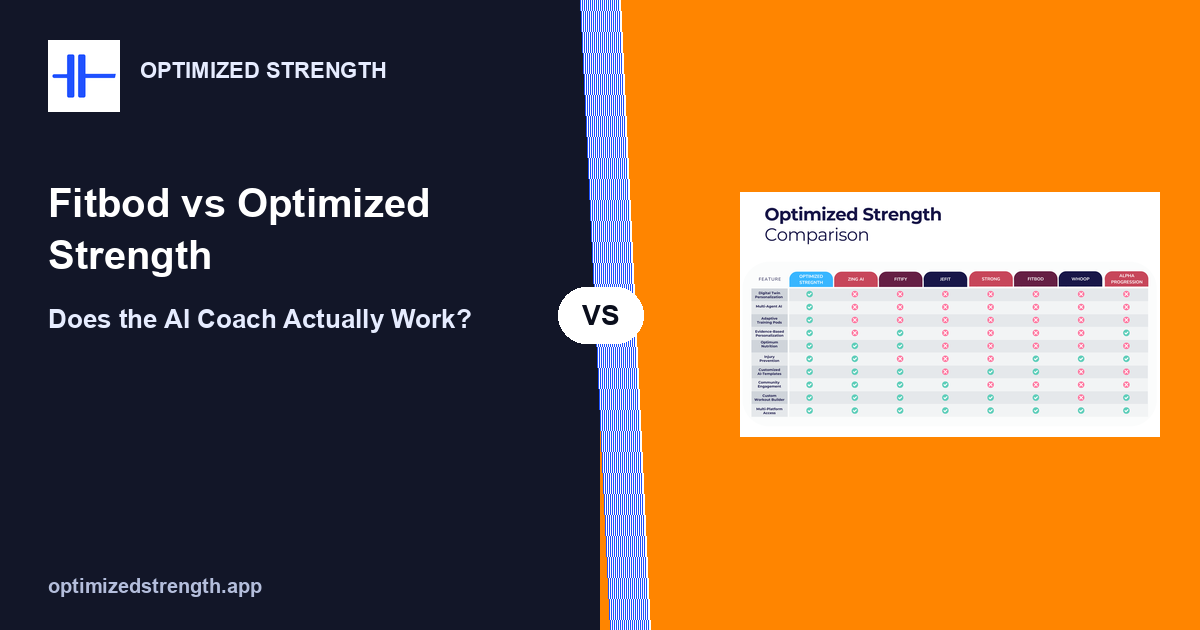
Comparison table
The practical verdict
Fitbod works if you want generated sessions and accept a monthly fee for that autopilot. Optimized Strength works if you want to ask the coach something hard and get an answer useful enough to load the bar. One optimizes for output. The other optimizes for dialogue.
If you have already bounced off Fitbod’s paywall, try a week of conversational coaching in Optimized Strength. Bring a real problem — stalled squat, bad sleep, crowded gym — and judge the quality of the reply. That answer is the product test, not another store-listing buzzword.
One more practical note on price psychology: paying about sixteen dollars a month feels fine when every session feels tailored. It feels expensive the week the generator ignores your fatigue and you still have to think. Conversational coaching earns its keep when it saves you from a bad session — not when it merely rearranges the same six movements. If you are comparing annual cost, count how many times an opaque plan made you guess anyway. That guess tax is the real bill.
CTA: Open Optimized Strength, start a chat with the AI coach about your current program, and compare that experience to a silent generated workout. Gym owners evaluating engagement: see optimizedstrength.app.